
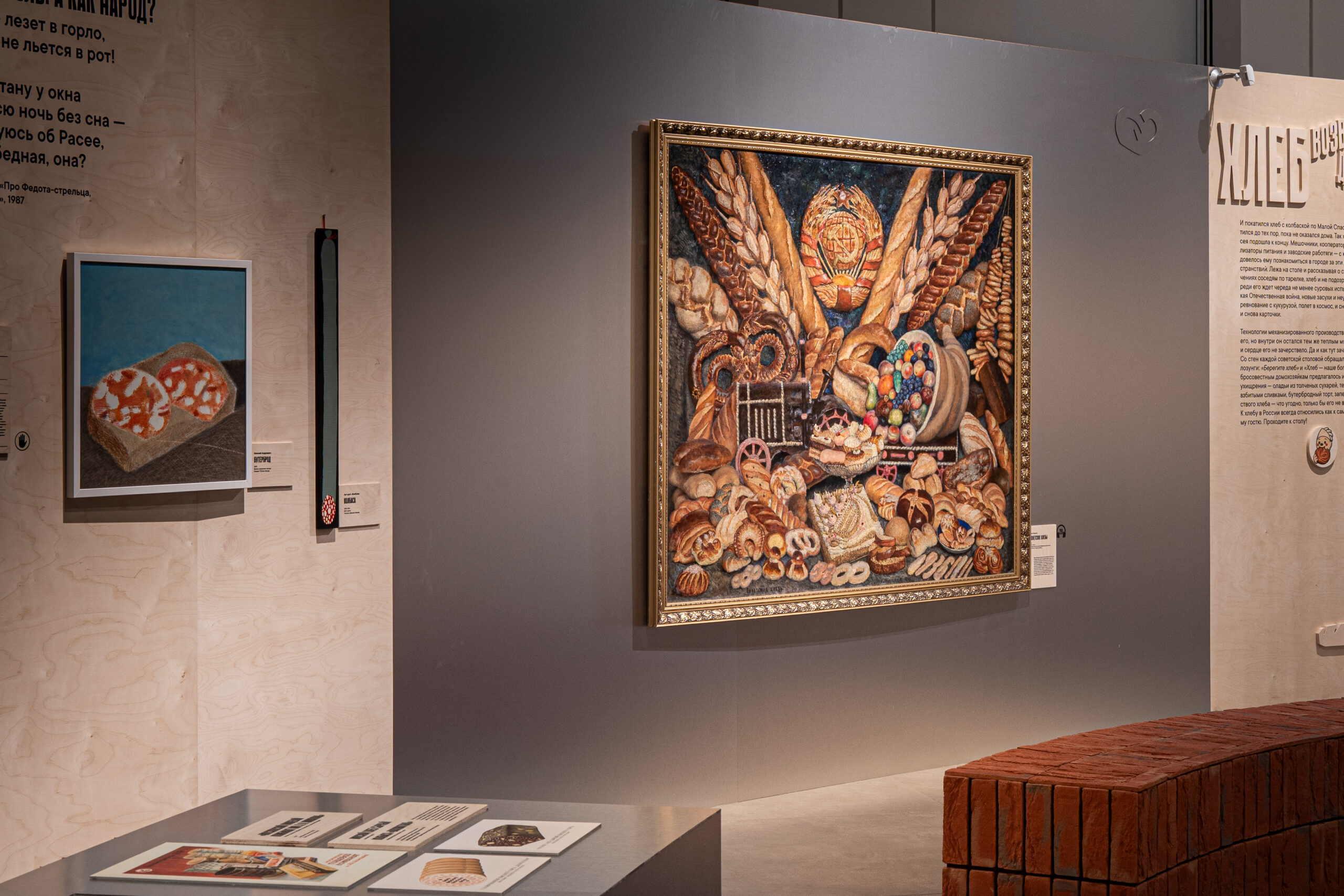
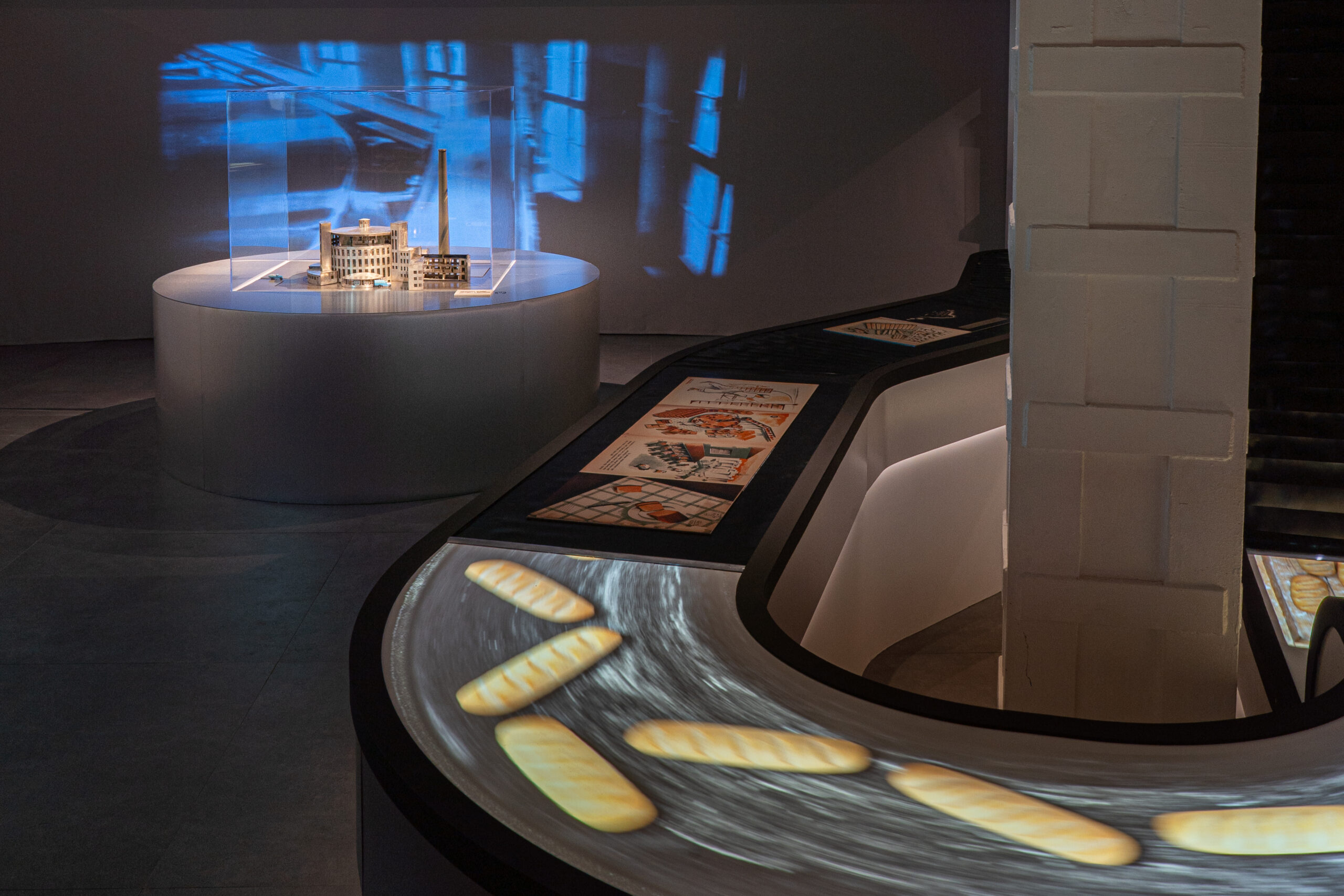

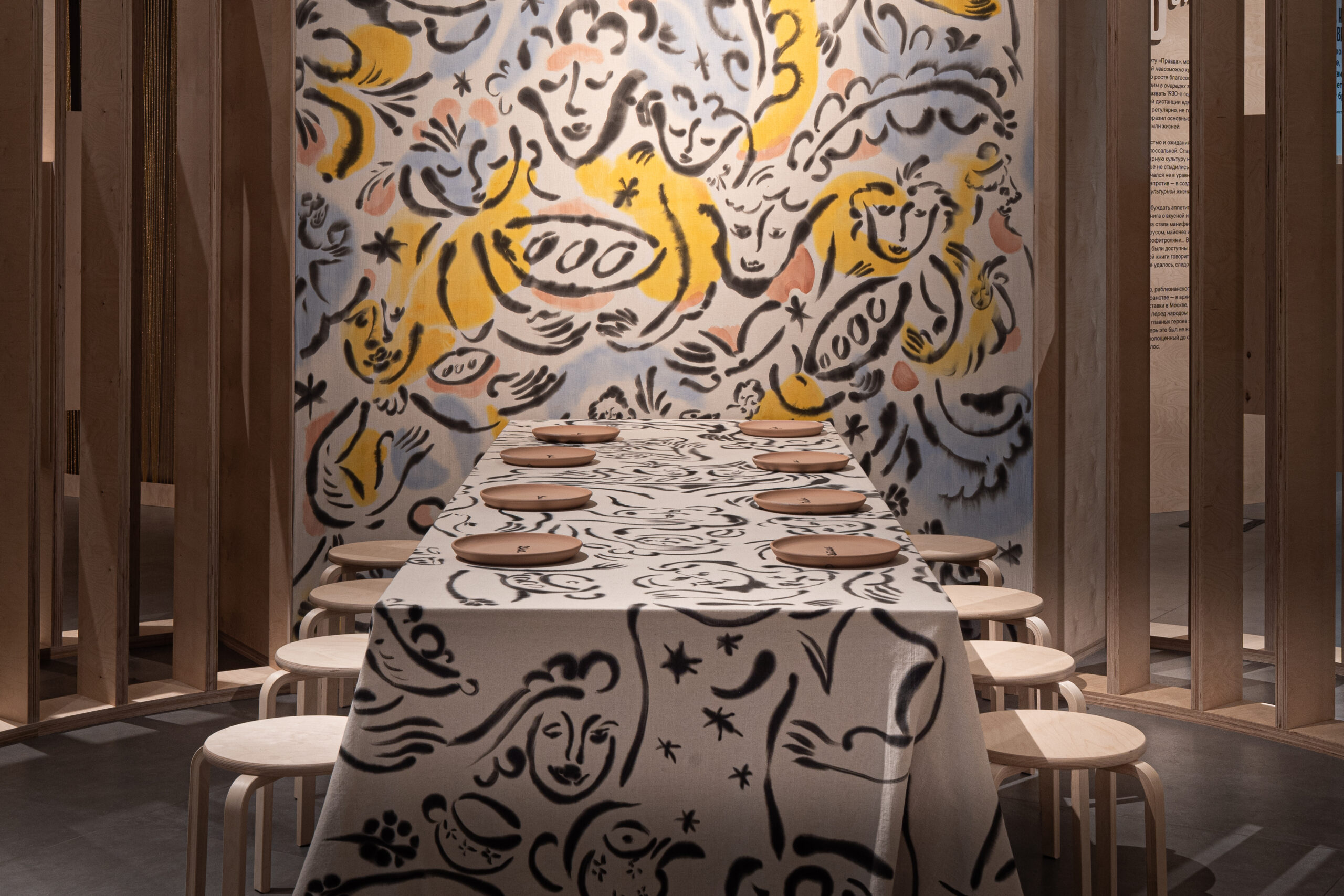
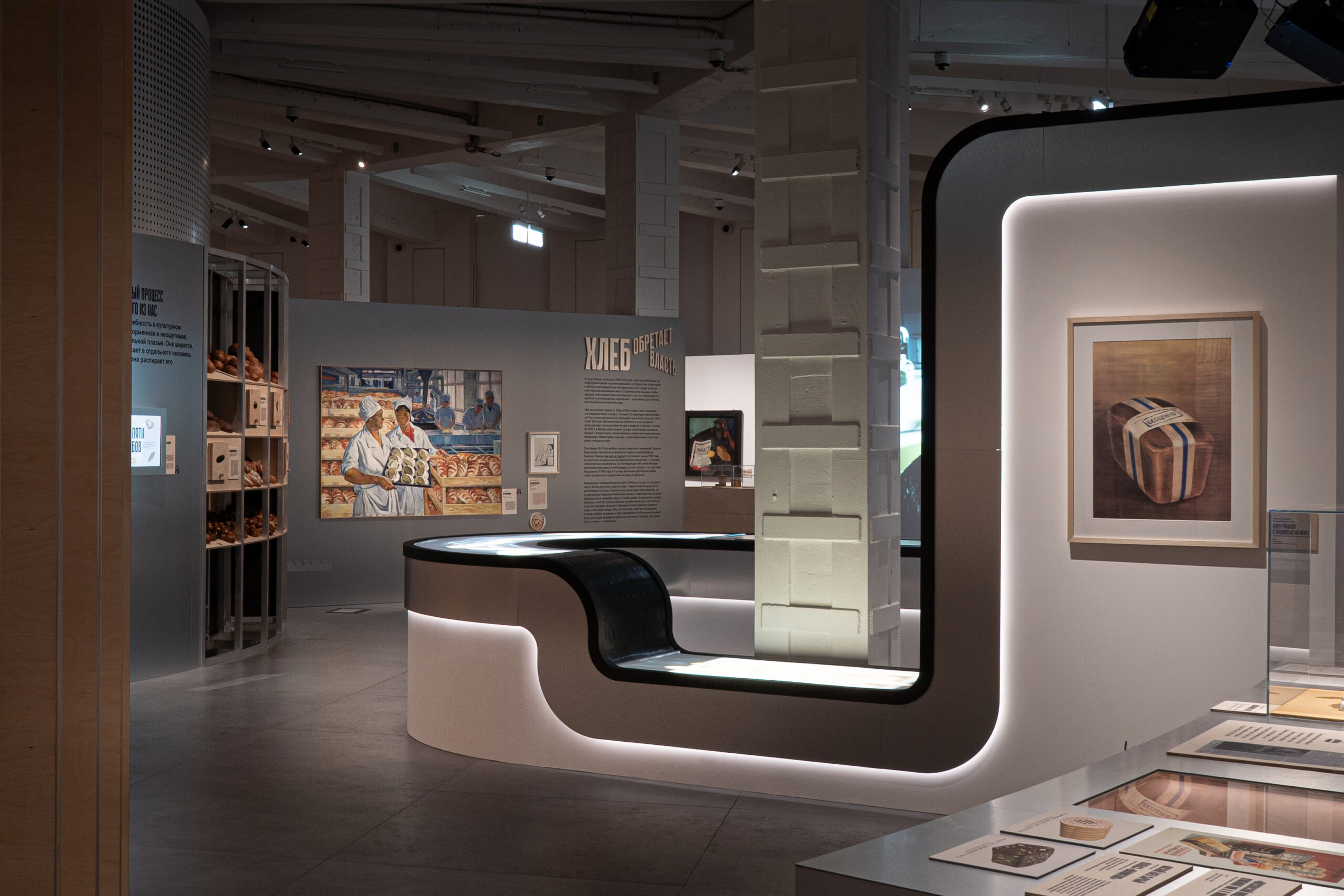

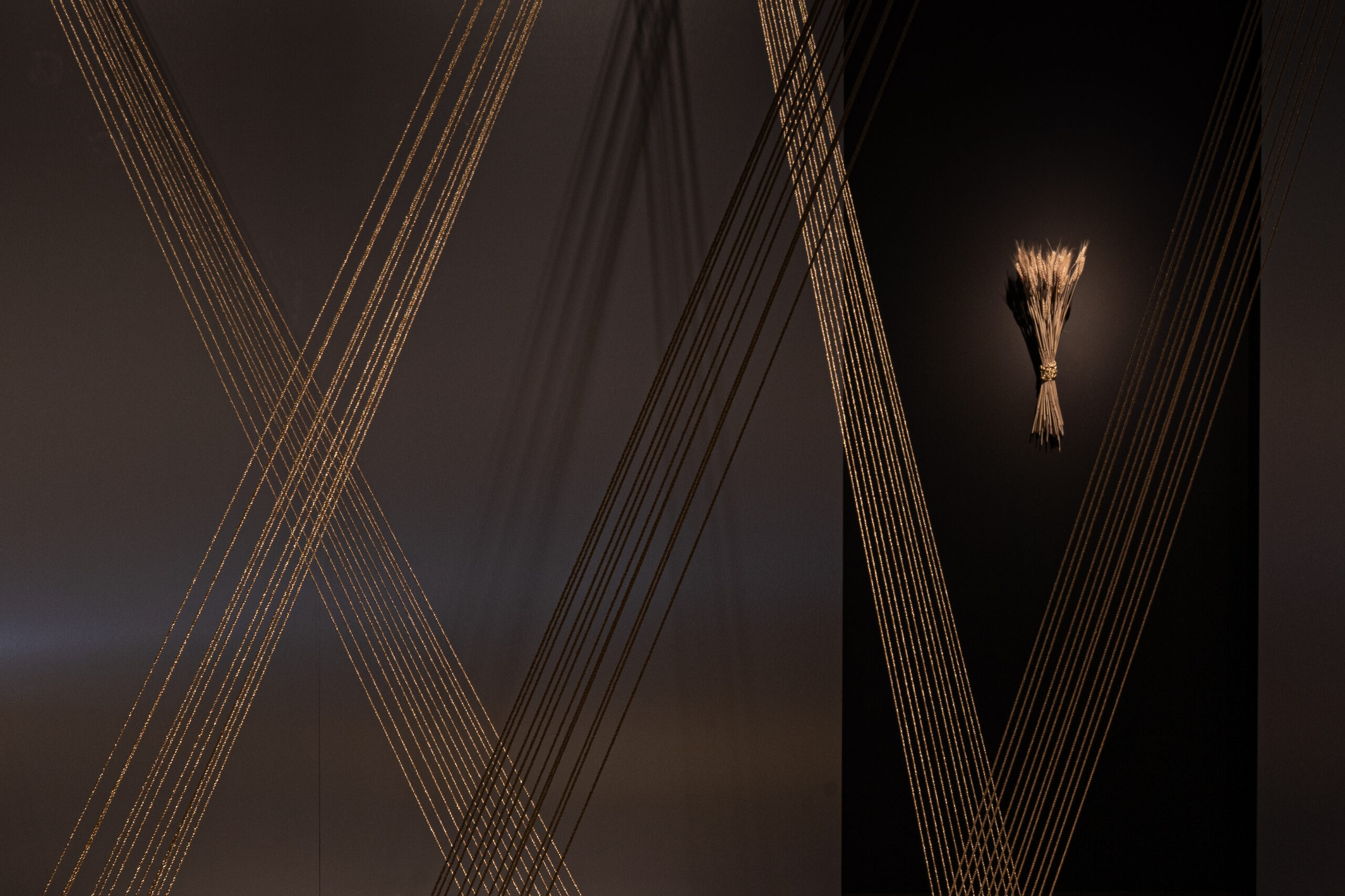
The “Bread” exhibition at the Zotov Center tells the story of bread in Russia during the first half of the 20th century—from the village oven to industrial production. The exhibition’s design translates this story into the language of materials, textures, and spatial arrangements.
The color palette has been deliberately kept to a minimum. The predominant white evokes flour and creates a neutral backdrop for the artworks and exhibits. In this way, the space gradually reveals the history of bread not through literal decorations, but through simple material associations—from the natural and handmade to the industrial, and back again.
The architecture is based on “solyar”—that is, the sun, whose rays divide the exhibition into sections. All movement is radial. The entrance area greets visitors with golden stretched threads resembling ears of grain. Further on, the materials become part of the narrative: brick evokes a stove and appears in the section on famine; metal evokes an industrial conveyor belt; and plywood connects the theme of bread with the image of trees and natural materials.